A Living Laboratory

The Monteverde Cloud Forest Preserve sits atop the Continental Divide, where Caribbean moisture meets Pacific wind.

This encounter of climates creates a remarkable mosaic of microhabitats: dripping moss forests, clearings bright with orchids, and ridges cloaked in cloud.

Each niche shelters a different community of species — turning Monteverde into a natural laboratory of evolution.

Here, mist becomes climate, and climate becomes life.

“Where two seas breathe into one forest.”

The Five Realms of Life

From the canopy to the forest floor, the Reserve’s wildlife thrives in five interconnected worlds — each revealing a different face of the cloud forest.

Discover lives that move, crawl, and sing within the mist.

Birds of the Cloud Forest

Life Among the Clouds

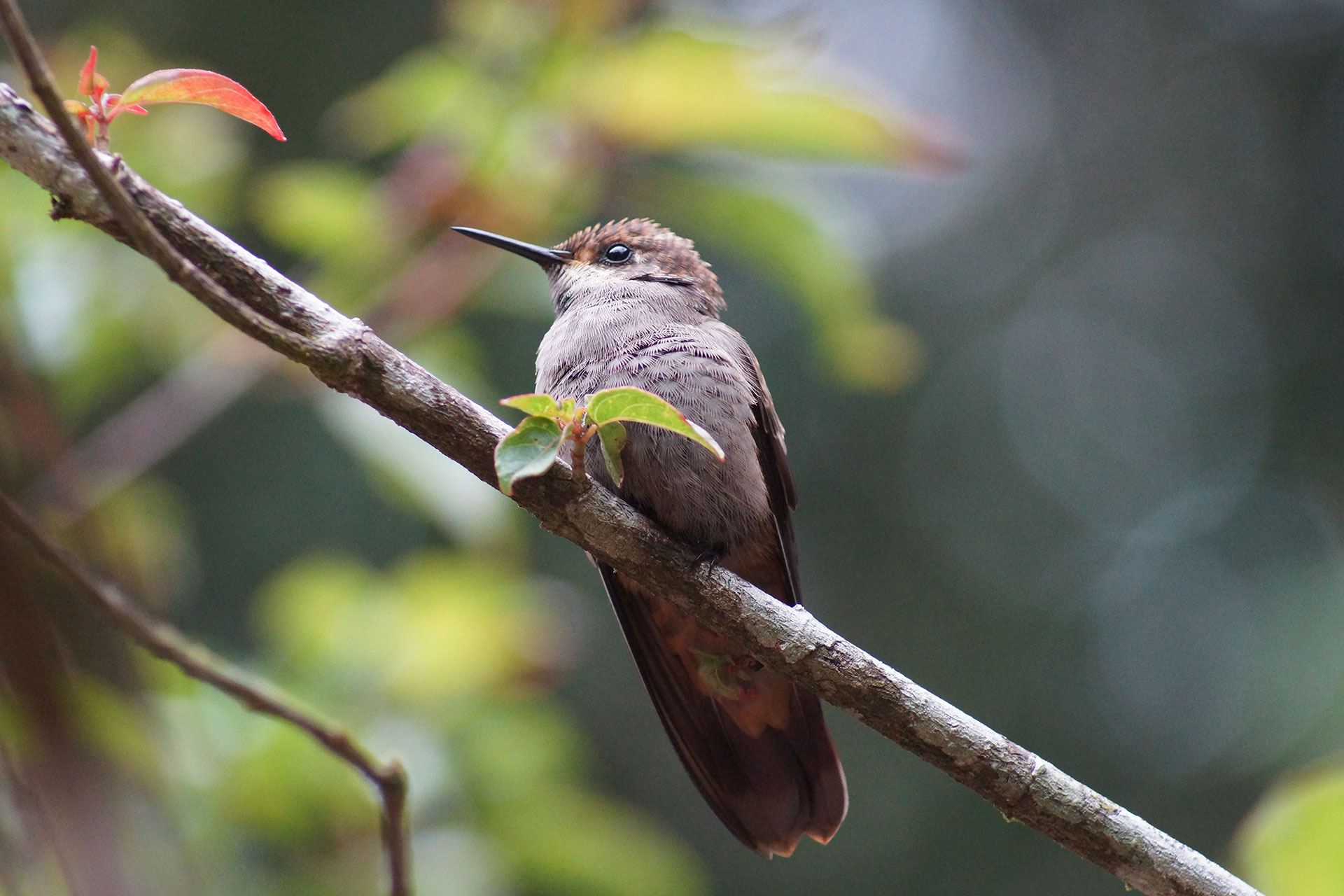
In Monteverde, the birds live between earth and sky. Here, altitude and mist shape entire worlds of color and sound.

Between 3,900 and 5,900 feet (1,200–1,800 meters), every level of the forest tells a different story: Up high, bellbirds ring across the canopy; below, quetzals nest in ancient trees.

Because the Preserve lies on the Continental Divide, species from the Pacific and Caribbean meet here — forming one of the richest bird communities in the Americas.

Species to Look For

Resplendent Quetzal

(Pharomachrus mocinno)

A sacred symbol of freedom in Mesoamerican culture, still nesting in Monteverde’s old-growth oaks.

Near Threatened

Three-wattled Bellbird

(Procnias tricarunculatus)

Its metallic call can be heard for miles — a sound that defines the Monteverde canopy.

Vulnerable


Emerald Toucanet

(Aulacorhynchus prasinus)

Agile fruit-eater and vital seed disperser that shapes forest regeneration.


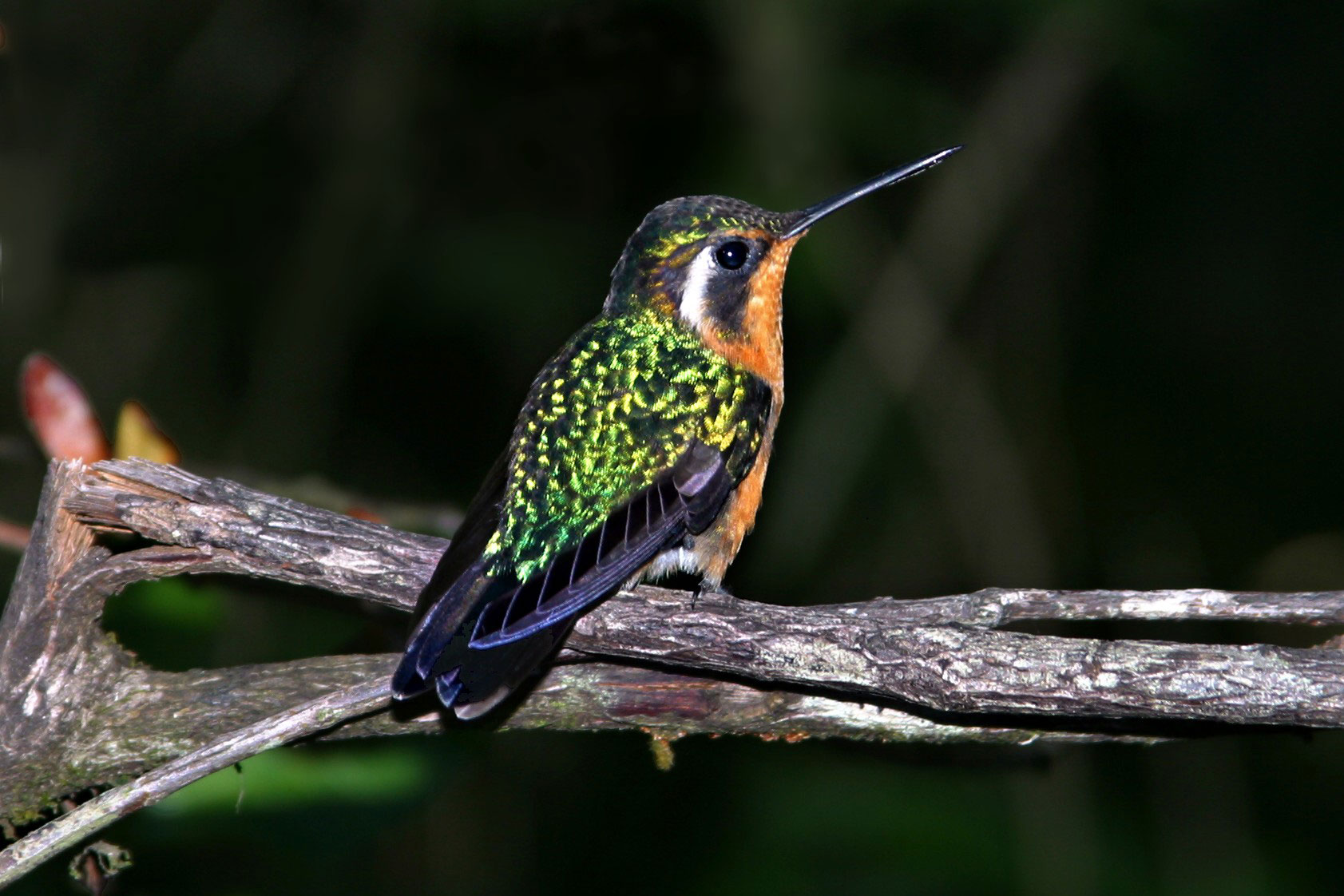
Violet Sabrewing

(Campylopterus hemileucurus)

The largest hummingbird in the region, flashing violet wings as it hovers in the mist.


Black Guan

(Chamaepetes unicolor)

Once threatened by hunting, now a conservation success thanks to local protection.


Slaty-backed Nightingale-Thrush

(Catharus fuscater)

A quiet presence in the undergrowth, its song emerges only when the forest rests.

Mammals of the Cloud Forest

A World of Hidden Lives

Monteverde’s mammals reveal how diversity thrives in silence.

From the treetops to the forest floor, each species plays a part in maintaining the balance between life and decay.

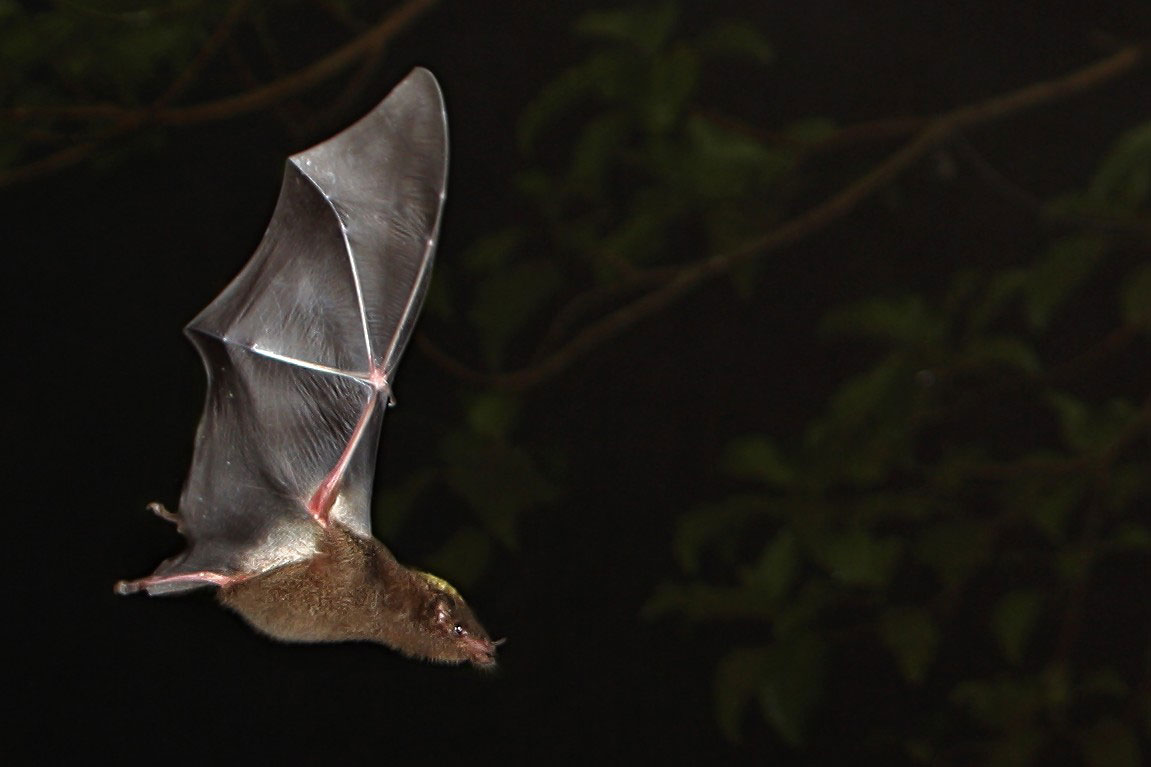
Bats pollinate flowers that bloom after dusk. Small rodents carry seeds into the shadows. Even the elusive felines — ocelots and margays — keep populations in check.

The forest depends on them as much as they depend on the forest.


Species to Look For

Baird’s Tapir

(Tapirus bairdii)

The largest land mammal in Central America, endangered yet still roaming Monteverde’s deeper forests.

Endangered

Jaguar

(Panthera onca)

Apex predator and guardian of the forest’s balance, rarely seen but often captured by camera traps.

Near Threatened

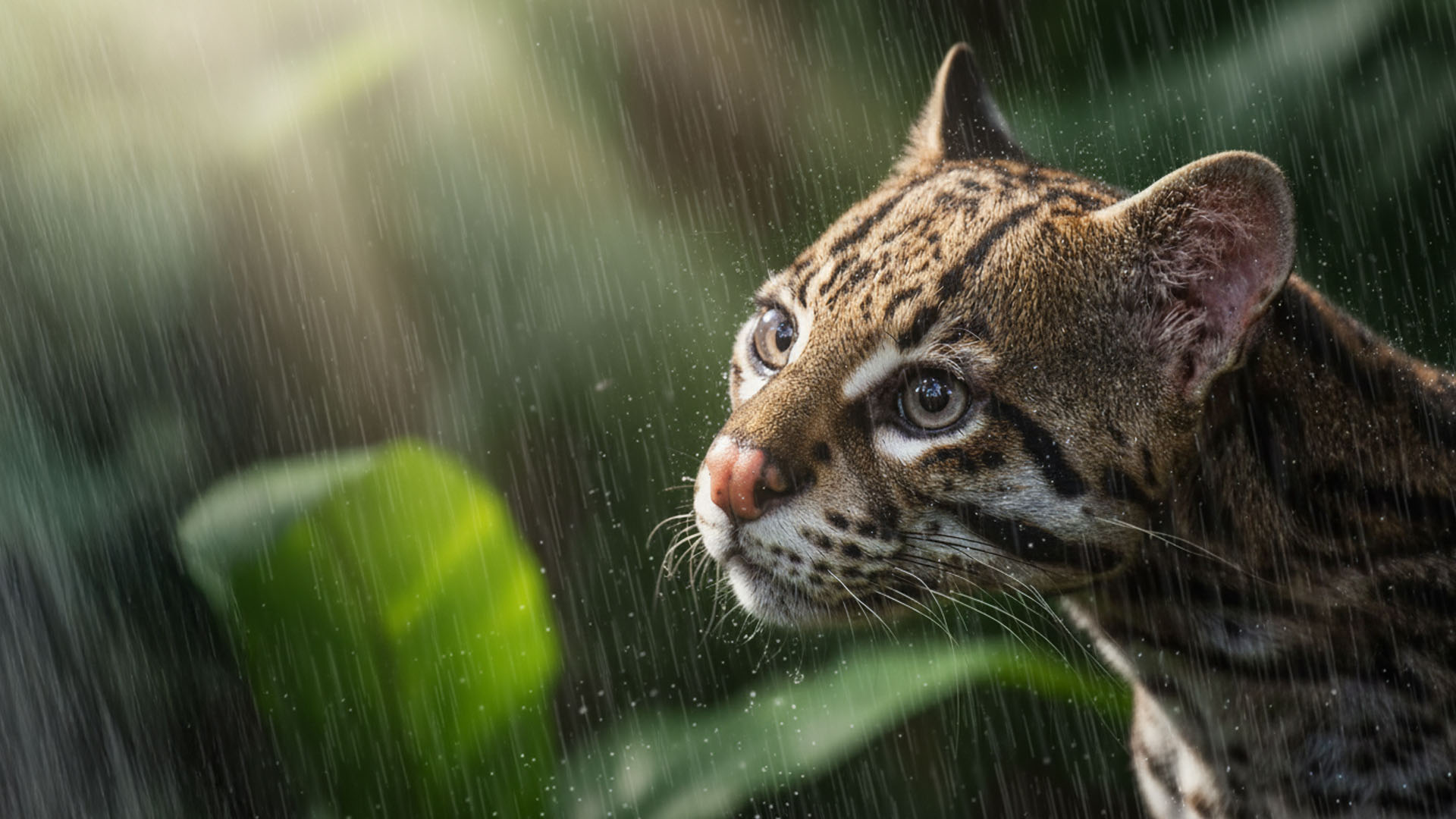
Ocelot

(Leopardus pardalis)

A silent, elegant hunter that keeps small mammal populations in check.

White-faced Capuchin

(Cebus imitator)

Clever and social, these monkeys are vital seed dispersers linking canopy and forest floor.

Vulnerable

Two-toed Sloth

(Choloepus hoffmanni)

The slow rhythm of the cloud forest — moving only when necessary, conserving every drop of energy.

Tilarán Bat Community

(various species)

Monteverde’s night sky hosts over 30 bat species, from nectar feeders to the Great False Vampire Bat (Vampyrum spectrum).

Near Threatened

Species to Look For

Baird’s Tapir

(Tapirus bairdii)

The largest land mammal in Central America, endangered yet still roaming Monteverde’s deeper forests.

Endangered

Jaguar

(Panthera onca)

Apex predator and guardian of the forest’s balance, rarely seen but often captured by camera traps.

Near Threatened

Ocelot

(Leopardus pardalis)

A silent, elegant hunter that keeps small mammal populations in check.

White-faced Capuchin

(Cebus imitator)

Clever and social, these monkeys are vital seed dispersers linking canopy and forest floor.

Vulnerable

Two-toed Sloth

(Choloepus hoffmanni)

The slow rhythm of the cloud forest — moving only when necessary, conserving every drop of energy.

Tilarán Bat Community

(various species)

Monteverde’s night sky hosts over 30 bat species, from nectar feeders to the Great False Vampire Bat (Vampyrum spectrum).

Near Threatened

Reptiles of the Cloud Forest

Masters of patience and precision.

Beneath leaves, along mossy trunks, and through clear forest streams, Monteverde’s reptiles embody the patience of evolution.

Within the Preserve, 37 reptile species have been recorded — lizards, snakes, and turtles adapted to the constant moisture and cool temperatures of the cloud forest.

Their lives unfold slowly — in balance with light, shadow, and mist — revealing how even silence can sustain a forest.

Life in the Cool Shadows

Reptiles are cold-blooded in form, but warm-blooded in spirit.

Under the forest’s constant cloud cover, they wait for brief moments of sunlight, storing energy with precision and blending into bark, rock, and moss.

Every flick of a tail and ripple in a stream tells a story of patience, endurance, and evolution’s quiet genius.

 Species to Look For

Blue-eyed anole

(Anolis woodi)

A slender, agile lizard recognized by its striking blue eyes, often seen basking quietly on branches.

Cloud forest Anole

(Anolis leditzigorum)

A species found only in high-elevation cloud forests, perfectly adapted to cool, misty habitats.

Jeweled giant canopy anole

(Anolis insignis)

A large, arboreal anole that moves high in the canopy, its scales catching flashes of light as it climbs.

Side-stripe Palm Pit Viper

(Bothriechis lateralis)

A beautifully colored arboreal viper, usually resting on mossy branches; admired for its vivid greens and calm stillness.

Black-speckled Palm Pit Viper

(Bothriechis nigroviridis)

A darker, high-elevation viper found in cooler zones — often motionless among bromeliads.

Central American Milk snake

(Lampropeltis abnorma)

A harmless, vividly patterned snake whose red, black, and white bands mimic venomous relatives.

Amphibians of the Cloud Forest

Life Adapted to the Clouds

Amphibians flourish in Monteverde’s cool, mist-fed forests, where humidity rarely breaks and temperatures remain steady between 57.2°F and 71.6°F (14°C and 22°C). This delicate balance keeps their permeable skin moist — vital for breathing and reproducing.

From 2,800 to 6,000 feet (850–1,840 meters), each elevation tells its own story: salamanders hiding in bromeliads, glass frogs guarding eggs above streams, and tree frogs calling into the fog.

But their existence is fragile. A few drier nights, a slight rise in temperature — and silence replaces song.

Emerald Glass Frog

(Espadarana prosoblepon)

A translucent, bright-green frog often found near streams, where its delicate skin blends with the leaves.


Monteverde Moss Salamander

(Nototriton gamezi)

A small, secretive salamander that lives among mossy roots and humid forest floors.

Ring-tailed webfoot salamander

(Bolitoglossa robusta)

A rare, high-elevation salamander known for its distinctive ringed tail and fully webbed feet.

Vulnerable

Mountain Stream Tree Frog

(Isthmohyla rivularis)

A critically endangered species once thought extinct, now surviving in cool, fast-running streams.

Endangered

Green-eyed frog

(Lithobates vibicarius)

A robust frog with striking green eyes, often found near ponds and wetlands.

Endangered

Meadow Tree Frog

(Isthmohyla pseudopuma)

A slender, agile frog common along vegetation near forest openings and riparian areas.

Invertebrates of the Cloud Forest

The Hidden Majority

Invertebrates make up more than 80% of all animal species on Earth — and Monteverde is no exception.

Thousands of species live here, many still unknown to science.

They crawl beneath the leaf litter, flutter through shafts of light, and weave silk between the branches.

Each invertebrate plays a role: decomposing fallen matter, dispersing seeds, pollinating orchids, or controlling other insect populations.
Together, they form the quiet machinery that keeps the cloud forest alive — a living network of motion, cooperation, and invisible design.

Species to Look For

Blue Morpho Butterfly

(Morpho peleides)

Its brilliant wings scatter sunlight through the canopy. A symbol of metamorphosis and fragility, it pollinates flowers and connects forest layers.

Jewel Beetles

(Buprestidae spp.)

Brilliant, metallic beetles whose colors catch the misty light — living gems of the cloud forest.


Cloud Forest Firefly

(Lampyridae spp.)

On misty nights, their glow marks the rhythm of nocturnal life — a visual symphony linking science and wonder.


Stick Insect

(Anthericonia anketeschke)

A master of camouflage, blending seamlessly with twigs and leaves in the understory.


Python millipede

(Nyssodesmus python)

A striking black-and-yellow millipede whose bold patterning warns predators of its chemical defenses.


 Science and Conservation

The Preserve is not only a refuge — it’s a research station where science meets wonder.

Since the 1970s, the Tropical Science Center has led long-term monitoring programs that record bird migrations, mammal activity, and changes in reptile and amphibian populations.

Through camera traps, acoustic recorders, and climate data, scientists listen to the forest itself — a conversation between life and change.

Each sound in the forest is data, and each silence a question that guides our work.
Monteverde’s findings have shaped global understanding of how climate change affects tropical ecosystems and the species that depend on them.

When and Where to See Wildlife

The forest changes with every hour and season.

In the dry months (December–April), birds nest and display brilliant plumage; during the wet season (May–November), amphibians and reptiles emerge in abundance.

Early morning and dusk are the best times to observe the forest’s rhythms — hummingbirds feeding, mammals foraging, frogs calling after rain.

Guided experiences like the Natural History Walk and Night Walk reveal the forest safely and responsibly, helping visitors see not only wildlife, but also the systems that sustain it.

Visit the cloud forest

How You Can Help

Every species in Monteverde depends on the protection of its home — and every visitor becomes part of that protection.

Your visit supports conservation, research, and education for local communities.

By walking softly, listening closely, and caring deeply, you help ensure that the forest’s voices — its songs, calls, and silences — continue to echo through the mist.

Support Conservation Efforts